🧼 Data Clean Rooms Explained: What They Cost, What They Fix, and When You Don't Need One
What a data clean room actually does, what it costs in 2026, and when the free walled-garden versions are enough — hype removed.

🚀 THE EXECUTIVE SUMMARY
The Definition: A data clean room is a controlled environment where two or more parties analyze their combined customer data without either side ever seeing the other's raw records. Your customer list and a partner's (or an ad platform's) data are matched inside the room — usually on encrypted keys — and only aggregated results come out.
The Core Insight: Clean rooms are quietly becoming background infrastructure — the IAB Tech Lab reports 64% of companies using privacy-preserving technologies are using them — but the vendor pitch skips two facts. First, the walled-garden versions (Amazon Marketing Cloud, Google Ads Data Hub) are free, and for most advertisers they answer 80% of the questions that matter. Second, the neutral, cross-platform build is an enterprise project: one implementor survey puts the average enterprise setup at roughly $879,000 all-in. Know which one you are shopping for before you take the demo call.
What Is a Data Clean Room and How Does It Actually Work?
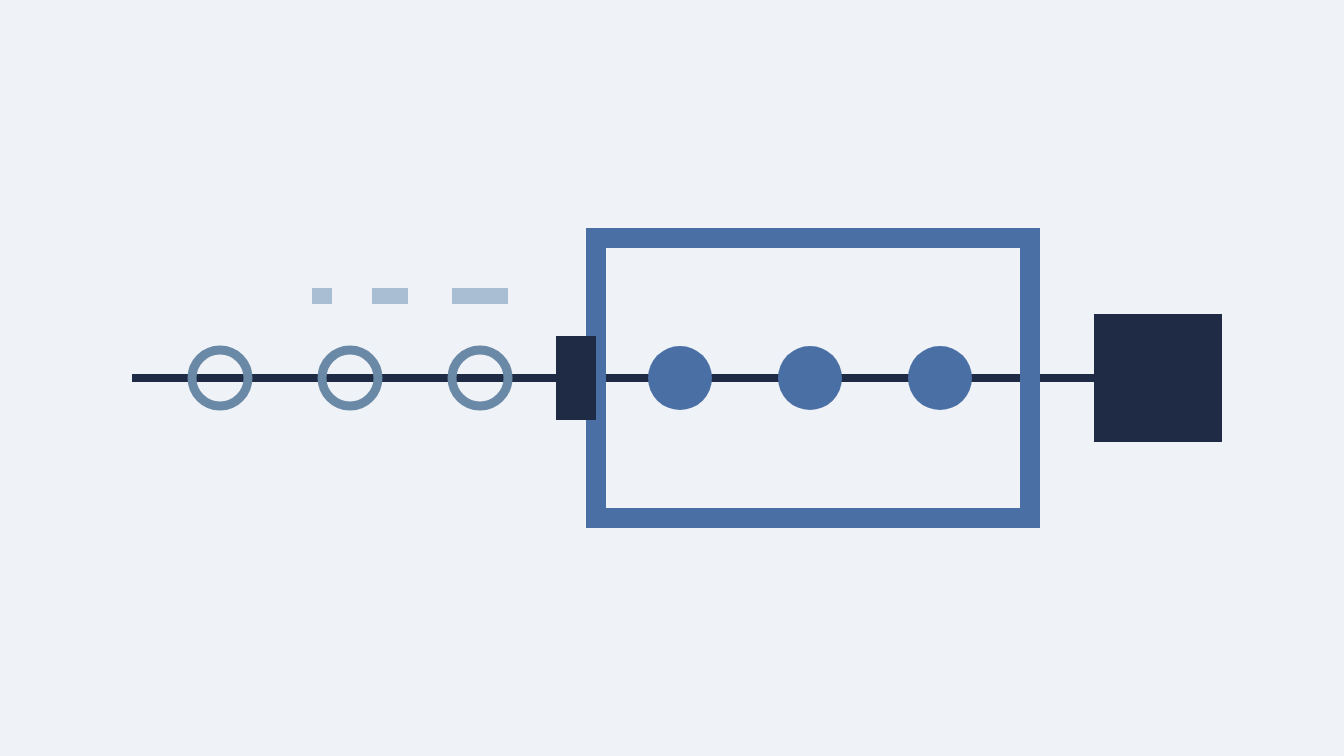
Picture a bank vault with two doors. You bring your first-party data in one door; a partner brings theirs in the other. Inside, records are joined on a shared key — hashed emails, platform IDs — and the room enforces the house rules: no row-level exports, minimum audience sizes on every result, and queries restricted to what both parties agreed to. What leaves the room is an aggregate: overlap counts, conversion lifts, audience segments. What never leaves is the underlying customer list.
The mechanics matured fast in the last eighteen months. The IAB Tech Lab finalized PAIR v1.1 (July 2025), which uses commutative cryptography to match multiply-encrypted join keys without ever decrypting them, and ADMaP v1.0 (February 2025), which does the same for conversion data using private set intersection and trusted execution environments. Translation for operators: the matching layer is becoming standardized plumbing, which weakens the lock-in argument every proprietary vendor has leaned on.
Why now? The polite story is Chrome's cookie saga, but the durable drivers are legal and structural: iOS App Tracking Transparency, GDPR, CCPA, and their cousins keep degrading cross-site signal regardless of what Chrome ships. If you have read our piece on identity stitching without the CDP tax, a clean room is the inter-company version of the same problem: joining data you are not allowed to simply hand over.
The GDPR and CCPA Angle: 'Clean' Does Not Mean 'Compliant by Default'
This is where vendor decks get slippery. A clean room is a privacy-enhancing technology, not a legal basis. Hashing an email address does not anonymize it under GDPR — a hashed identifier that can be matched back to a person is still personal data, and matching it inside a clean room is still processing. You need the same things you needed before: a lawful basis for the match, consent language that actually covers partner data collaboration, and in most enterprise cases a data protection impact assessment before the first query runs.
The practical checklist: confirm your consent records cover the specific partner use (not just "analytics"), confirm the room enforces aggregation thresholds so small segments cannot be reverse-engineered, and get the roles on paper — who is controller, who is processor, and who answers when a regulator asks where a match key came from. If your consent infrastructure is shaky, fix that first; we covered why in our consent mode piece. A clean room built on un-consented data is just a well-encrypted liability.
Walled Garden, Neutral, or Build: The Real 2026 Cost Table
"Do we need a clean room?" is really three different purchases. Here is the honest comparison:
| Option | 2026 cost | What you get — and the catch |
|---|---|---|
| Google Ads Data Hub | Free | Google campaign analysis with a 13-month lookback. SQL required, and every result must clear a 50-user minimum — small segments return nothing. Google's data only. |
| Amazon Marketing Cloud | Free (since September 2025) | 25-month lookback, no-SQL query builder, open to all Sponsored Ads advertisers. The strongest free option — inside Amazon's walls. |
| AWS Clean Rooms | Usage-based | Neutral infrastructure, priced per CRPU-hour, plus $0.50 per 1,000 records matched for rule-based matching. You bring the engineering; no free plan. |
| Snowflake collaboration | Usage-based | Cross-publisher joins where your warehouse already lives — attractive if your data is in Snowflake, a migration project if it is not. |
| Managed vendors (LiveRamp and peers) | Enterprise contract | Identity graph plus service layer. Note the consolidation: LiveRamp bought Habu in 2024 and WPP acquired InfoSum in 2025 — the independent middle is thinning. |
The adoption numbers explain the split. In retail media, roughly two-thirds of organizations already use clean rooms — mostly the free walled-garden kind. Meanwhile 48% of brands that have not adopted cite budget, and — the number vendors quote least — 39% of current users say they struggle to extract actionable insights from the one they bought.
The Expert Perspective
The pattern we see repeatedly: teams buy the neutral enterprise clean room to "own their data strategy," then discover the bottleneck was never the room — it was the questions. A clean room is a join, not a strategy. The teams getting real value in 2026 use it for a short list of forward-looking jobs: incrementality tests that ad platforms cannot grade themselves on, share-of-wallet analysis with retail partners, and channel planning across walled gardens. The teams getting nothing bought it to re-answer attribution questions their own warehouse could already answer — the same over-collection reflex we flagged in the customer-360 trap. Start from the three questions you cannot currently answer, and let them pick the room — never the reverse.
Conclusion & Next Steps
Clean rooms are real infrastructure with a real, narrowing purpose: answering cross-party questions that raw data sharing legally cannot. In 2026 the sequencing is clear. First, exhaust the free rooms of the platforms where you already spend — AMC's 25-month lookback costs nothing but analyst time. Second, audit consent coverage before any partner match, not after. Third, if a genuine cross-platform question survives those two steps, scope the neutral build against the standards (PAIR, ADMaP) so you are not buying lock-in the industry is actively dismantling. And if none of your questions require a partner's data — skip the category entirely, without apology.
FAQ
What is a data clean room in simple terms?
A secure environment where two companies match their customer data on encrypted keys and see only aggregated results — overlap, lift, segments — never each other's raw records.
Are data clean rooms automatically GDPR compliant?
No. They reduce exposure, but matching hashed identifiers is still processing personal data. You still need a lawful basis, covering consent, and clear controller/processor roles — the room does not supply those.
How much does a data clean room cost in 2026?
From free (Amazon Marketing Cloud, Google Ads Data Hub) to usage-based infrastructure (AWS, Snowflake) to enterprise builds that average near $879,000 all-in per implementor surveys. The spread is the point: define the question before the budget.
Does a small or mid-size business need one?
Usually not beyond the free walled-garden rooms. If your cross-party questions fit inside Amazon's or Google's ecosystem, the free tier plus a disciplined query list beats an enterprise contract you will underuse.
References & Sources Cited
- IAB Tech Lab — Data Clean Rooms Guidance, PAIR v1.1, ADMaP v1.0
- Digital Applied — Data Clean Rooms in 2026: A Marketer's Decision Guide (cost survey, platform comparison, Skai 2025 figures)
- AWS Clean Rooms — official pricing
- Technotrenz — Data Clean Room Adoption Statistics (Skai, eMarketer, IDC compilations)
- Perspection Data — Identity Stitching Without the CDP Tax
- Perspection Data — Server-Side Tracking Without Consent Mode v2
- Perspection Data — The Customer-360 Trap
See you soon,
Team Perspection Data
Perspection Data is researched and fact-checked by our Editorial Team.