⏱️ GA4's New Custom Conversion Windows: What to Set, What Breaks, and Why Your Old Numbers Won't Match
GA4 now takes any conversion window — EVC 1–30 days, CTC 1–90. Derive yours from measured conversion lag, log the change date, and mind the seam.
🚀 THE EXECUTIVE SUMMARY
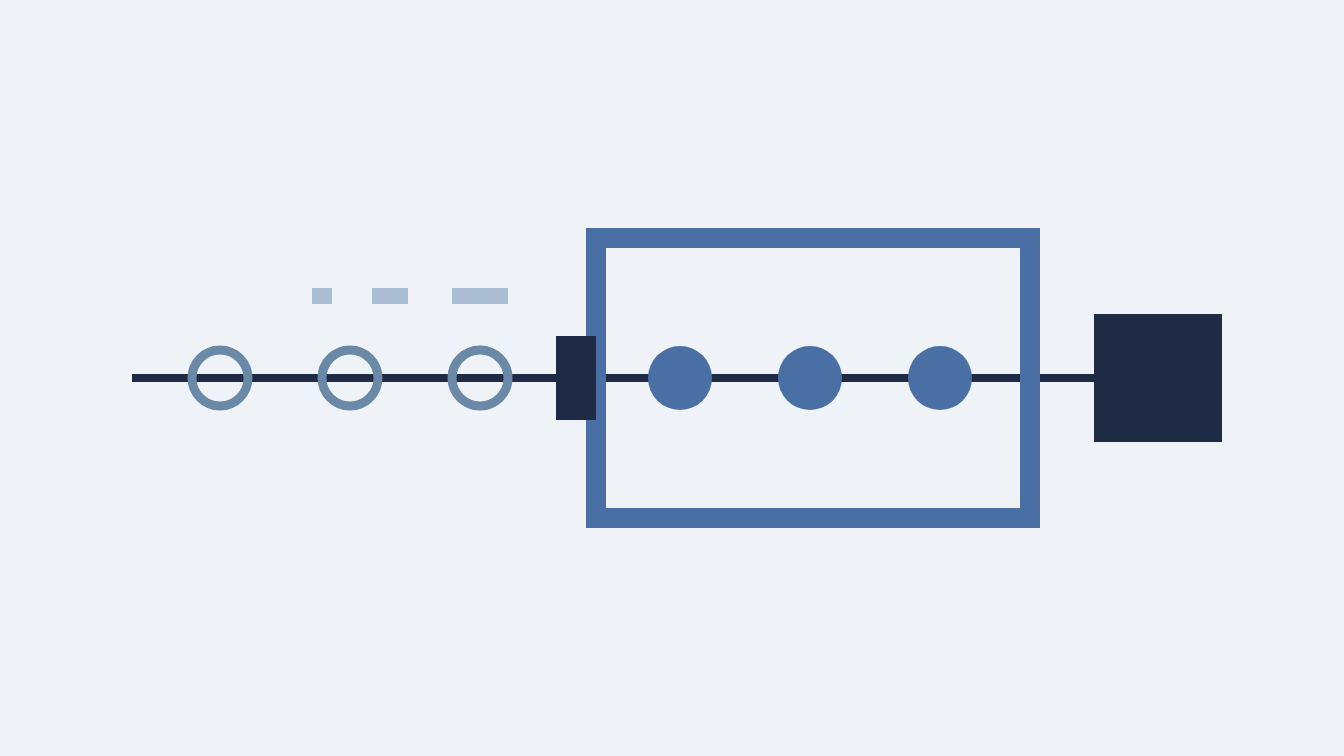
The Definition: A conversion window (lookback window) is the number of days a platform is allowed to look backward from a conversion to find an ad interaction it can take credit for. A 7-day click window means: if the click happened 8 days before the purchase, that purchase reports as if the ad never existed.
The Core Insight: On 11 August 2026, Google Analytics quietly removed its fixed conversion windows. Engaged-view conversions, pinned at 3 days since the setting existed, now accept any integer from 1 to 30 days; click-through windows went from six presets to any integer from 1 to 90. The pitch is "align attribution to your business cycle." The practitioner reality: the setting is not retroactive, Google ships no guidance on choosing a value, and every edit stitches a permanent seam into your conversion series. This is not a reporting feature. It is a schema change with a UI, and it deserves schema-change discipline: derive the number from your measured conversion lag, version it, and never compare across the seam.
What actually changed on August 11
Two dials, both under Advertising > Conversion management > Settings (and mirrored in the linked Google Ads conversion interface):
- Click-through conversions (CTC): previously limited to 1, 7, 14, 30, 60 or 90 days. Now any integer from 1 to 90.
- Engaged-view conversions (EVC): the window that credits a conversion to a video ad someone watched (10+ seconds) but did not click. Previously fixed at 3 days, full stop. Now any integer from 1 to 30.
Mechanically, nothing about data collection changes. The same clicks and engaged views arrive; the window only changes which of them are eligible for credit when a conversion later fires. That is exactly why the edit is so consequential: widen a window and conversions attributed to ads jump on the edit date — not because performance improved, but because the bookkeeping rules changed mid-ledger. PPC Land, which caught the release note first, flagged the part Google left unresolved: the note says nothing about recomputing history, and GA4's standing behavior is that lookback changes apply only from the moment of the change. Before the edit date, the old rule; after it, the new one. That discontinuity never heals.
The compliance angle: the riskiest part is that nothing warns you
Anyone with editor rights on the property can move this dial. There is no approval flow, no annotation dropped into reports, no "this series changed definition on this date" marker — the number that moves is one that CFOs read (cost per acquisition) and agencies are graded on. Sit with that incentive for a moment: an agency having a bad quarter can widen a client's click window from 30 to 90 days and report a conversion lift that is pure definition change. Nothing in the product stops or even records it beyond the admin change history nobody reads.
The GDPR lens applies too, more quietly. A 90-day lookback only works if click-level identifiers are retained and joinable for 90 days; if your legal basis and retention schedule were written around a 30-day measurement purpose, widening the window is a small, silent expansion of processing that data-minimization reviews will eventually ask about. Not a crisis — but the kind of thing that should appear in your records of processing, and won't unless the person moving the dial tells someone.
The window zoo: why your platforms will never agree
The change also makes cross-platform comparison strictly worse, because GA4 windows are now continuous while everyone else's remain presets. The current state of the clocks:
| Counting rule | Click window | View / engage window | Configurable? |
|---|---|---|---|
| GA4 advertising conversions (from 11 Aug 2026) | Any integer, 1–90 days | Engaged-view: any integer, 1–30 days | Fully |
| Meta Ads (2026 defaults) | 7-day (options: 1 or 7); since March 2026 a "click" must be an actual link click | 1-day engage-through (social interactions, 5s+ video views) + 1-day view-through | Presets only |
| GA4 key-event lookback (Attribution settings — a separate dial) | 30 or 90 days, presets | Presets only | |
Two honest strategies exist. Align: force everything to the nearest common denominator (7-day click everywhere GA4 allows it) and accept undercounting of slow converters in exchange for comparability. Centralize: treat each platform's numbers as that platform's bidding signal, and keep your decision-grade truth in your own warehouse with one documented window applied uniformly. Our house view has not moved since our piece on platform underreporting: platform dashboards are for feeding algorithms; your warehouse is for decisions. The new GA4 flexibility strengthens the centralize case — a continuous dial that any editor can move is one more reason platform-reported conversions cannot be your system of record.
The Expert Perspective
The right window is not a preference — it is a property of your customers, and you can measure it. Pull the distribution of time-from-first-click-to-conversion (the GA4 BigQuery export gives you event timestamps; a session-scoped query gets you lag per converting user). Find your P90: the lag that covers 90% of conversions. If P90 is 12 days, a 7-day window silently discards a tenth of your attributable conversions; set CTC a little above P90 and stop. For EVC, the old fixed value of 3 days was at least a stable convention — keep 3 unless video is a primary channel and your measured view-to-conversion lag says otherwise. And resist the urge to tune windows seasonally: a slightly-wrong-but-stable window produces trend lines you can trust; an "optimized" window that moves twice a year produces seams you will spend Q1 explaining. Stability beats precision in every reporting context that matters.
Conclusion & Next Steps
- Check what your property is set to today, and screenshot it (Advertising > Conversion management > Settings).
- Measure your conversion lag distribution from raw event data; note the P90.
- Decide your windows once — CTC covering P90, EVC at 3 unless measured otherwise — with a written one-line rationale.
- If you change anything: record the date in your team changelog, annotate every dashboard that plots conversions, and tell whoever owns finance reporting before they find the step in the chart themselves.
- Lock down editor rights on the property if agencies report against GA4 numbers. The dial is now continuous, and so is the temptation.
FAQ
Is the GA4 conversion window change retroactive?
No. Lookback edits apply from the moment of the change. History stays under the old rule, so a widened window shows up as a step-change in conversions on the edit date — a seam, not a lift.
What were GA4's conversion windows before August 2026?
Engaged-view conversions were fixed at 3 days and could not be edited. Click-through conversions offered six presets: 1, 7, 14, 30, 60 or 90 days.
Why don't GA4 and Meta conversion counts match?
Different clocks and different credit rules. Meta defaults to 7-day click plus 1-day engage-through and 1-day view-through — and since March 2026 counts social interactions and 5-second video views under engage-through — while GA4 now uses whatever integer someone set. Identical campaigns will disagree by design; signal loss widens the gap further.
What conversion window should I use in GA4?
The one your data picks: cover roughly the 90th percentile of your measured click-to-conversion lag, write the rationale down, and leave it alone. There is no universally correct number — which is exactly why Google declined to recommend one.
References & Sources Cited
- Google Analytics — What's new in Google Analytics (release notes, 11 August 2026)
- PPC Land — Google Analytics drops the fixed 3-day engaged-view conversion window
- Search Engine Land — Google Analytics adds custom conversion attribution windows (14 August 2026)
- TheOptimizer — How Meta Ads attribution actually works in 2026 (defaults, engage-through)
- Google Analytics — Attribution and attribution modeling (key-event lookback)
See you soon,
Team Perspection Data
Perspection Data is researched and fact-checked by our Editorial Team.